
Blog
The Cost of Urgent Care Without Insurance: Is Direct Primary Care a Better Value?

For individuals and families without health insurance, routine illnesses can create unexpected medical expenses. A child with a suspected case of strep throat, an adult with a urinary tract infection, or a persistent cough may mean another urgent care visit, and with it, another urgent care bill. When primary care isn't readily accessible, some patients turn to urgent care or the emergency room for conditions that could otherwise be evaluated in a doctor's office.
These expenses can add up throughout the year, particularly when several family members need care. But the financial burden isn't the only concern. Relying on urgent care or emergency departments for routine medical needs can also mean seeing a different provider each time, with fewer opportunities for preventive care, follow-up appointments, and ongoing management of health conditions.
Direct primary care, or DPC, offers a different approach through a recurring membership fee for defined primary care services. For uninsured South Carolina residents, comparing the cost of individual medical visits with a DPC membership can help clarify the financial value of consistent access to care, even if the total annual expenses are sometimes similar.
How Much Do Urgent Care and ER Visits Cost Without Insurance?
Without health insurance, even a routine medical visit can create a substantial out-of-pocket expense. Costs depend on where patients receive care, the condition being treated, and whether additional testing or procedures are necessary.
A January 2026 report from the Health Care Cost Institute (HCCI) compared national healthcare prices for people with employer-sponsored insurance. Using 2022 claims data, researchers found the following average visit prices:
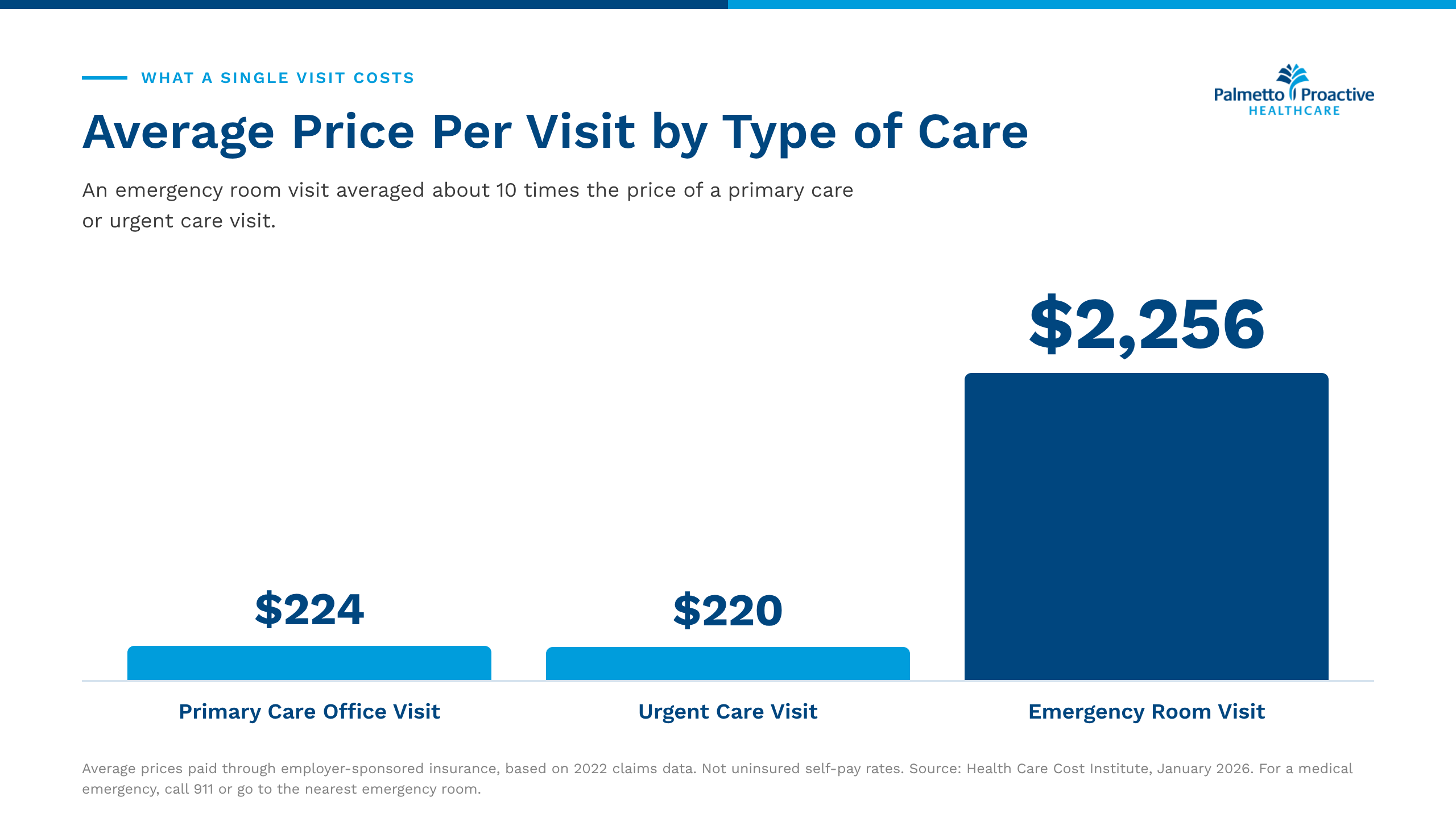
These figures reflect prices paid through employer-sponsored insurance, not uninsured self-pay rates. However, they illustrate the substantial difference between emergency treatment and care delivered in an outpatient setting.
Health Care Cost Institute
For uninsured patients, Solv's 2026 urgent care pricing guide estimates that a standard self-pay urgent care evaluation generally costs 150–280. Adding diagnostic tests, X-rays, or procedures can increase the bill to 300–500 or more. Emergency room charges can be considerably higher, particularly when hospital facility fees and additional services are involved.
Emergency room bills may include several separate charges:
-
Facility fees: Charges associated with maintaining hospital staff, equipment, and emergency treatment capabilities.
-
Professional fees: The cost of evaluation and treatment by a physician or other clinician.
-
Laboratory testing: Bloodwork, urine testing, and other diagnostic services.
-
Imaging: X-rays, CT scans, or other examinations used to evaluate symptoms.
-
Medications and procedures: Treatments administered during the visit, which may generate additional charges.
For uninsured individuals and families, these expenses can become difficult to manage when medical needs arise repeatedly throughout the year. A few urgent care appointments for respiratory infections, minor injuries, or other common conditions may add up to hundreds of dollars, even without an emergency room visit.
This makes the cost of routine healthcare worth considering beyond a single appointment, particularly for patients who do not have an established primary care provider.
How Delaying Medical Care Can Increase Healthcare Costs
For individuals without health insurance, deciding whether to visit a doctor often involves weighing the severity of symptoms against the cost of an appointment. Someone experiencing a persistent cough, urinary discomfort, or an unfamiliar illness may initially try to manage symptoms at home, particularly when paying for medical care means adjusting an already limited household budget.
Many minor illnesses can resolve with rest and appropriate home care. However, some conditions require medical evaluation or treatment, and delaying that care can allow symptoms to worsen. A urinary tract infection, for example, may sometimes progress to a kidney infection if left untreated. This can require more intensive treatment and, in severe cases, hospitalization.
The financial consequences can extend beyond the original medical concern. What might have involved an office evaluation, diagnostic testing, and prescription medication may instead require an out of pocket urgent care visit, emergency evaluation, or additional treatment. This progression illustrates why access to timely primary care matters.
For uninsured patients, the challenge is not always knowing whether a condition is serious. It may be deciding whether they can afford to find out.
Conditions Primary Care Can Often Treat
Many common illnesses and injuries can be evaluated and managed through primary care when symptoms are stable and there are no warning signs of a medical emergency. Having an established physician can make it easier to seek appropriate care when symptoms first appear and receive follow-up treatment when recovery takes longer than expected.
Examples include:
-
Urinary tract infections: Uncomplicated UTIs can often be diagnosed and treated in primary care. Symptoms may include burning during urination, increased frequency, or urgency. Fever, flank pain, or vomiting may indicate a more serious infection requiring prompt medical evaluation.
-
Colds, flu, and respiratory infections: Primary care physicians can evaluate respiratory symptoms, recommend appropriate treatment, and monitor recovery. Patients with asthma or other underlying respiratory conditions may require additional appointments when symptoms persist or trigger complications. Severe breathing difficulty, confusion, or other signs of respiratory distress require emergency care.
-
Minor injuries and slow-healing conditions: Sprains, strains, and small wounds can often be managed through primary care. Some injuries require follow-up evaluations to monitor healing, reassess symptoms, or determine whether additional treatment is necessary. Suspected fractures, severe bleeding, significant head injuries, or injuries affecting circulation may require emergency evaluation.
-
Blood pressure concerns and chronic conditions: Primary care provides ongoing monitoring, medication management, and preventive guidance for conditions such as hypertension and asthma. Patients experiencing changes in symptoms or difficulty managing their condition may benefit from more frequent evaluations. The American Heart Association's blood pressure guidelines explain how to interpret readings and recognize potentially dangerous elevations. Extremely elevated blood pressure accompanied by chest pain, neurological symptoms, or severe shortness of breath requires emergency assessment.
When One Appointment Isn't Enough
Not every medical concern resolves after a single visit. Someone with a weakened immune system may experience a prolonged recovery, while an individual with asthma may need additional monitoring after a respiratory infection. A sprained ankle that isn't healing as expected may also require reassessment or further testing.
For uninsured patients relying on urgent care, each follow-up appointment may involve another consultation fee, with additional charges for testing, imaging, or treatment. These expenses can accumulate even when the original condition was relatively minor.
Having an established primary care physician provides an opportunity for ongoing monitoring and continuity of care. Rather than starting over with a different clinician at each visit, patients can receive follow-up care from someone familiar with their medical history, previous treatments, and ongoing health concerns.
For individuals considering care, understanding which follow-up visits and services are included in the membership can help them compare the potential value of ongoing primary care with paying separately for each appointment.
Rising Health Insurance Costs and Healthcare Access in South Carolina
Rising health insurance premiums can put additional pressure on individuals and families managing tight budgets. Some may explore less expensive plans or alternative healthcare options, while others may find it increasingly difficult to maintain coverage they previously could afford.
According to KFF's 2026 Employer Health Benefits Survey, average annual premiums reached $9,804 for individual coverage and $28,303 for family coverage, including employer and employee contributions.
Healthcare affordability remains a concern in South Carolina. The Commonwealth Fund's 2025 State Scorecard ranked the state 36th nationally for overall health system performance and reported that 13% of adults were uninsured.
For uninsured residents of Greenville, Spartanburg, and surrounding communities, the need for routine medical care remains. Membership-based primary care offers one way to access ongoing primary care through predictable membership fees rather than paying separately for each covered office visit. While this does not replace health insurance, it may provide a more manageable approach to routine healthcare expenses.
How Direct Primary Care Changes Routine Healthcare Costs
Direct primary care (DPC) provides access to defined primary care services through a predictable monthly membership fee rather than charging separately for each covered office visit. For uninsured individuals and families, this model can make routine healthcare expenses easier to anticipate, particularly when multiple appointments are needed throughout the year.
Some DPC memberships start at approximately $80 per month, or $960 annually, for an adult. At this rate, membership may include:
-
Routine primary care appointments: Office visits for common illnesses, preventive care, and general health concerns without additional per-visit copays.
-
Same-day or next-day sick appointments: Access to timely evaluation for appropriate medical concerns when appointments are available.
-
Annual physicals and preventive care: Routine examinations and ongoing health assessments.
-
Chronic condition management: Regular monitoring and treatment adjustments for conditions such as hypertension, diabetes, and asthma.
-
Follow-up appointments: Continued evaluation when symptoms persist, recovery takes longer than expected, or treatment needs to be adjusted.
-
Ongoing physician communication: Opportunities to discuss health concerns with a familiar care team rather than starting over with a new provider at each visit.
Comparing Annual Membership Costs With Urgent Care
For uninsured patients, a single urgent care appointment may cost $150–$280 before additional testing or treatment, according to Solv's self-pay pricing estimates.
Consider how those expenses might accumulate over a year:
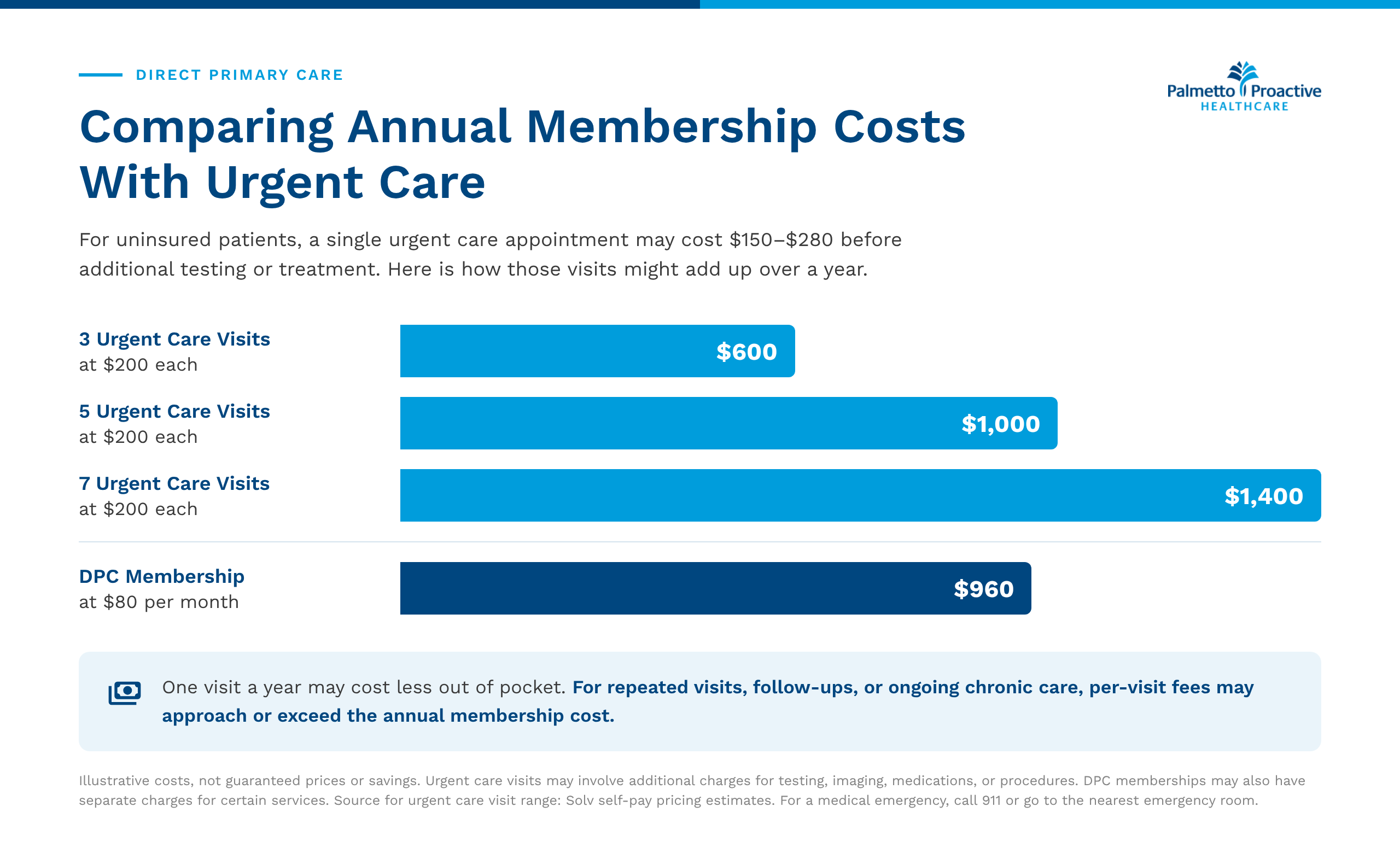
These are illustrative costs, not guaranteed prices or savings. Urgent care visits may involve additional charges for testing, imaging, medications, or procedures. Memberships may also have separate charges for certain services.
For someone who needs only one medical appointment during the year, paying out of pocket may cost less than a DPC membership. However, patients who require repeated evaluations, follow-up appointments, or ongoing management of chronic conditions may find that individual visit fees approach or exceed the annual membership cost.
The value also extends beyond the financial comparison. A membership provides ongoing access to covered services, including preventive appointments and follow-up care, rather than requiring patients to make a new financial decision every time symptoms arise.
This model does not replace health insurance. Emergency treatment, hospitalization, specialist services, and certain diagnostic procedures generally fall outside the membership and may create substantial additional expenses.
When Should You Go to the Emergency Room?
While membership-based care can help patients manage routine illnesses, emergency departments remain essential for potentially life-threatening medical concerns.
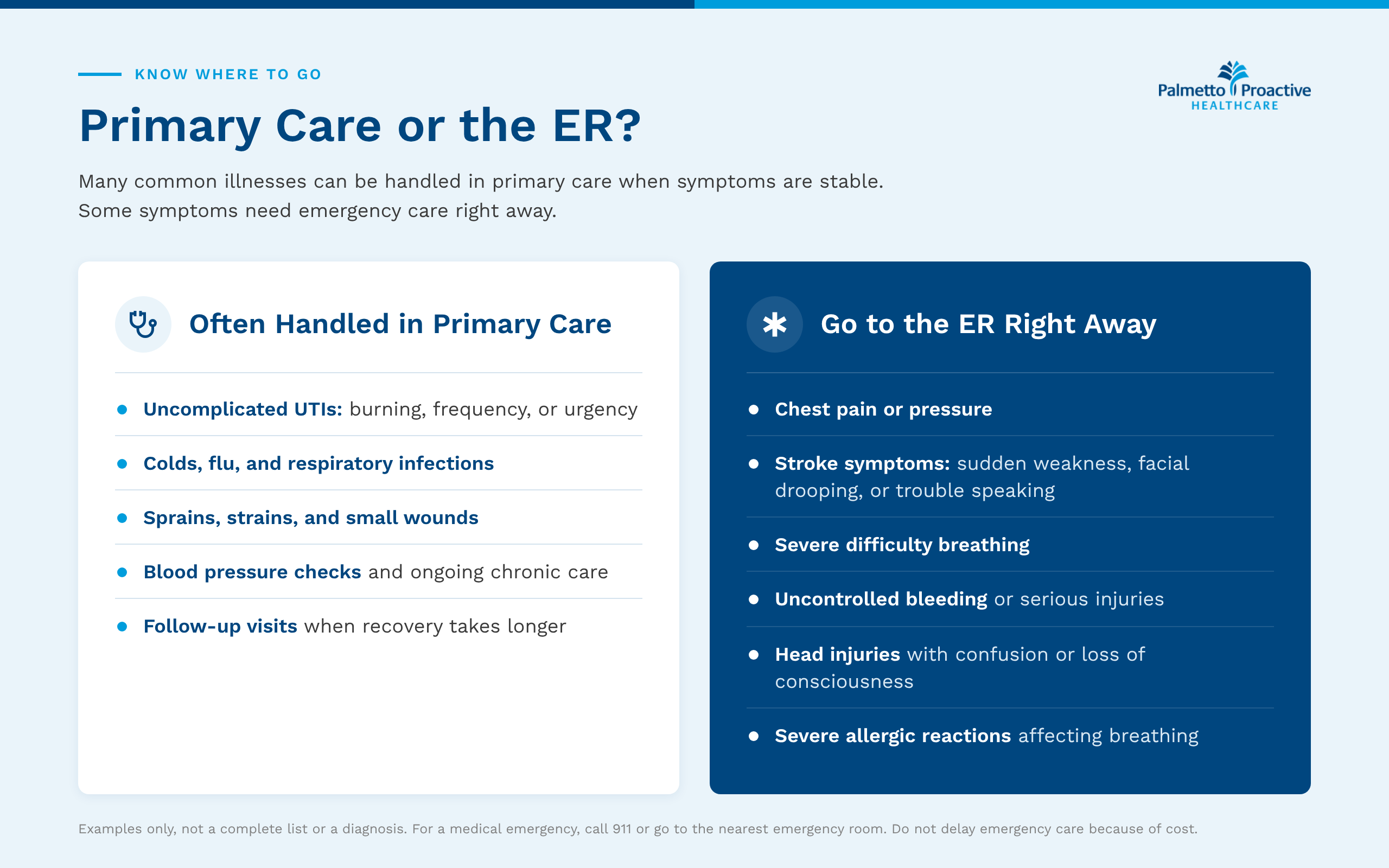
Seek immediate emergency care for symptoms such as:
-
Chest pain or pressure that may indicate a heart attack.
-
Stroke symptoms, including sudden weakness, facial drooping, or difficulty speaking.
-
Severe difficulty breathing or signs of respiratory distress.
-
Uncontrolled bleeding or serious injuries.
-
Significant head injuries, particularly those involving confusion or loss of consciousness.
-
Severe allergic reactions, especially those affecting breathing or causing swelling of the throat.
Medical emergencies require prompt treatment. Patients should not delay necessary emergency care because of concerns about cost or insurance coverage.
Affordable Primary Care Starts With Reliable Access
For individuals and families without health insurance, managing healthcare expenses involves more than comparing the cost of individual appointments. Repeated urgent care visits, unexpected medical bills, and delayed treatment can create financial uncertainty, particularly when ongoing care is needed.
This model of care offers a different approach by combining predictable fees with access to routine medical services and an established healthcare provider. Even when annual costs are comparable to paying for out of pocket individual visits, the ability to schedule follow-up appointments and seek care when new symptoms arise can provide meaningful value.
For South Carolina residents exploring alternatives for routine healthcare, Palmetto Proactive's individual membership program offers access to care through a membership-based model.
Explore Palmetto Proactive's membership options to see how consistent primary care may fit your healthcare needs and budget. Contact us today.