
Blog
Your FSA Expires December 31: Here's What Happens After It Resets in January

January 1 often marks the beginning of a new flexible spending account (FSA) plan year, but it doesn't necessarily mean unused funds from December have disappeared. Depending on an employer's rules, employees may be able to carry over a portion of their balance or have additional time to use it.
Understanding these deadlines can help employees plan medical appointments, anticipate out-of-pocket expenses, and make better use of their healthcare benefits. For those considering direct primary care, it's also important to understand how membership-based care fits alongside employer-sponsored benefits and which expenses may qualify for FSA reimbursement.
How Flexible Spending Accounts Work
A healthcare FSA is an employer-sponsored benefit that allows employees to set aside pretax earnings for eligible medical expenses, including copayments, deductibles, prescriptions, dental treatment, and certain medical supplies.
Employees select an annual contribution during enrollment, which is deducted from their paychecks throughout the plan year. For 2026, the IRS permits employee contributions of up to $3,400, although employers may establish lower limits. According to IRS Publication 15-B, healthcare FSAs are subject to specific contribution limits and rules governing unused balances.
Unlike many other healthcare savings arrangements, the full annual FSA election is generally available at the beginning of the coverage period, even though payroll deductions occur gradually. This allows employees to plan for eligible medical expenses early in the year rather than waiting until they have contributed the full amount.
Does Your FSA Expire on December 31?
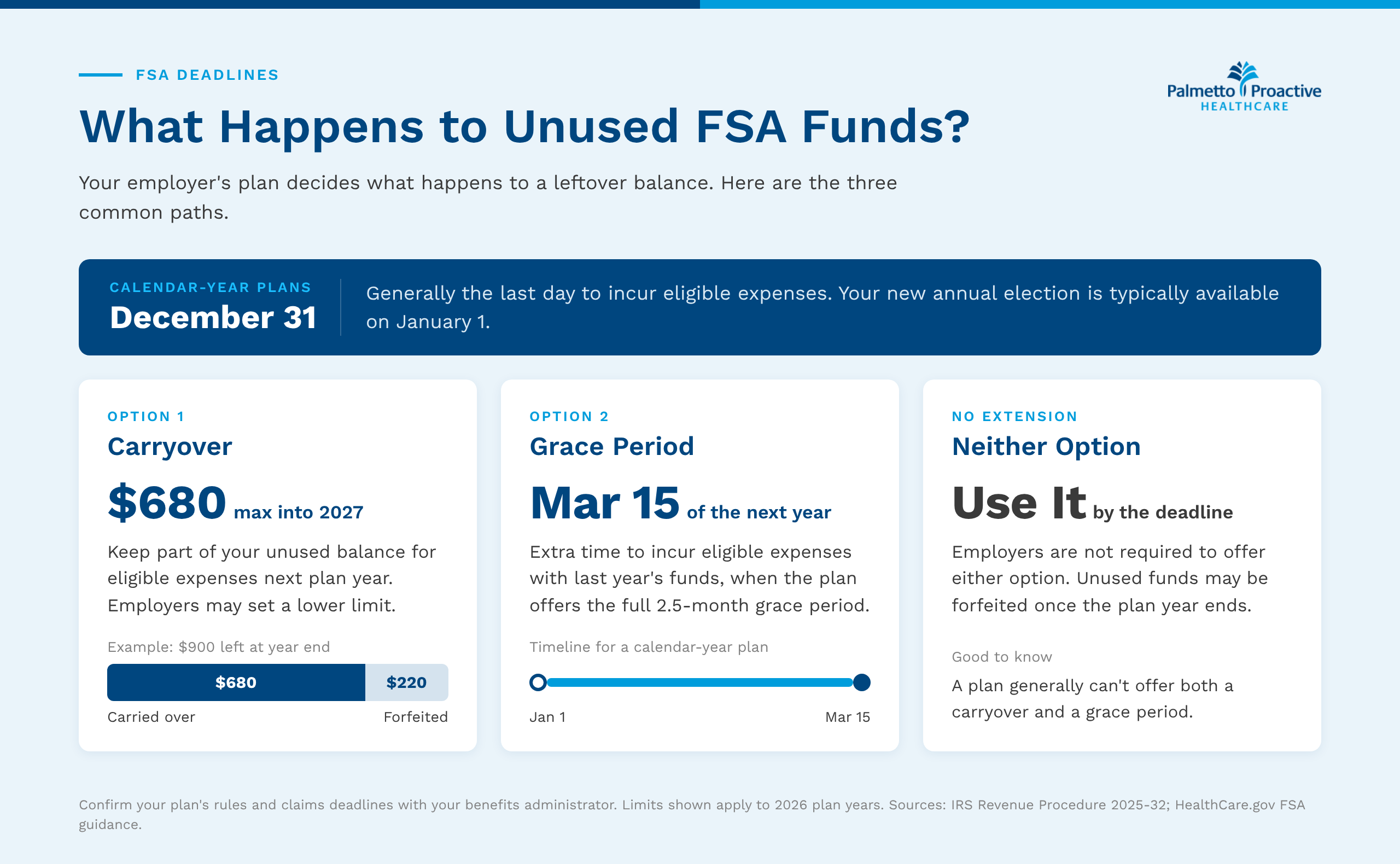
For calendar-year healthcare FSAs, December 31 is generally the last day to incur eligible medical expenses. However, some employers provide additional flexibility for unused funds through one of two options:
-
FSA carryover: Allows employees to retain a portion of their unused balance for eligible expenses during the following plan year. For 2026 plans, the maximum permitted carryover into 2027 is $680, although employers may set a lower limit. For example, an employee with $900 remaining could carry over $680 and forfeit the remaining $220 if the employer allows the maximum carryover.
-
FSA grace period: Extends the time employees can incur eligible expenses using funds from the previous plan year. For calendar-year plans offering the full two-and-a-half-month grace period, the deadline generally falls on March 15 of the following year.
Employers are not required to offer either option, and healthcare FSAs generally cannot provide both. HealthCare.gov's FSA guidance explains how these arrangements work.
Employees should also distinguish these deadlines from a claims run-out period, which provides additional time to submit reimbursement requests for expenses incurred during an eligible period. Confirming the applicable deadlines with the benefits administrator can help prevent unused funds from being forfeited.
What Happens When Your FSA Resets in January?
When a calendar-year FSA resets on January 1, the employee's new annual election generally becomes available for eligible medical expenses. For example, someone electing $2,000 for the new year can typically access that amount immediately, even though contributions are deducted from paychecks throughout the year.
Any remaining funds from the previous year are subject to the employer's carryover or grace-period rules. Employees should review their benefits portal to confirm available balances, reimbursement deadlines, and which healthcare expenses qualify before scheduling services or making purchases.
How FSA and HSA Rules Affect Direct Primary Care
Flexible spending accounts (FSAs) and Health Savings Accounts (HSAs) both offer tax advantages for eligible medical expenses, but their rules differ in ways that matter when considering direct primary care.
Healthcare FSAs are generally employer-sponsored, and unused funds may be forfeited unless the employer offers a carryover or grace period. HSAs, by comparison, are individually owned, and unused balances remain available from year to year.
Beginning in 2026, federal rules allow certain qualifying direct primary care arrangements to work alongside HSA eligibility. Eligible individuals may be able to contribute to an HSA while participating in a qualifying DPC membership and use HSA funds for qualifying membership fees.
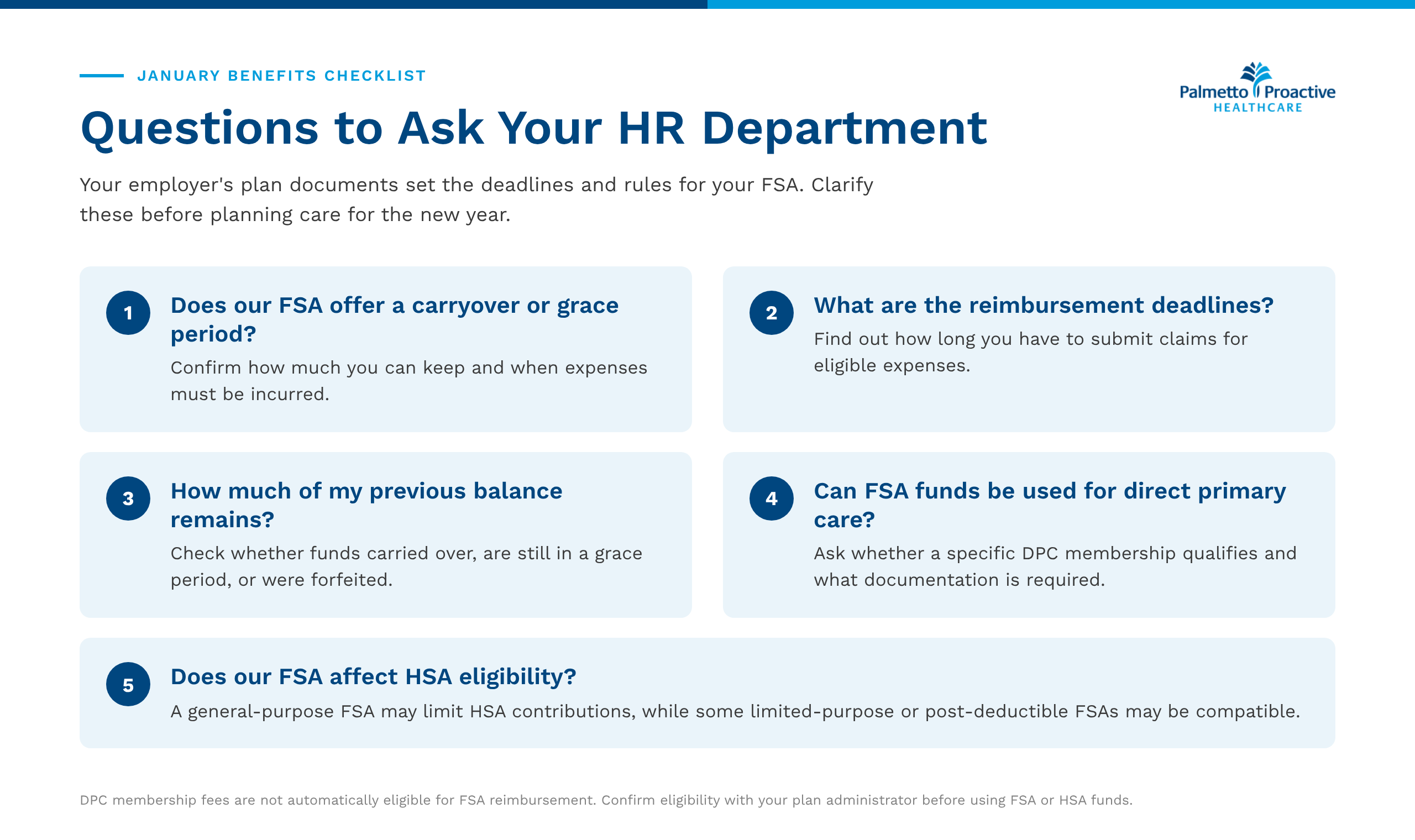
However, these HSA changes do not automatically make DPC membership fees eligible for FSA reimbursement. A general-purpose healthcare FSA may also affect eligibility to contribute to an HSA, while certain limited-purpose or post-deductible FSAs may be compatible.
Employees should review their specific benefits and consult their plan administrator before assuming that a DPC membership qualifies for reimbursement or that they are eligible to make HSA contributions.

How to Use FSA Funds Throughout the Year
Waiting until December to spend an FSA balance can lead to rushed purchases that provide little medical value. Planning ahead helps employees make better use of their benefits while ensuring healthcare decisions are based on actual needs.
A practical approach includes:
-
Identify upcoming medical expenses: Review anticipated costs for dental treatments, prescription eyewear, medications, specialist copayments, physical therapy, and eligible medical equipment. Some preventive services may already be covered by insurance without cost-sharing, so confirm whether an appointment will involve an eligible out-of-pocket expense.
-
Estimate annual spending: Add up predictable healthcare costs before selecting an FSA contribution. For example, $300 in prescription copayments, $250 in dental expenses, $200 for prescription glasses, and $150 in specialist copayments would total $900 in anticipated expenses.
-
Review your balance quarterly: Check available funds throughout the year to identify opportunities to schedule necessary care before applicable deadlines. Someone with a substantial balance in September may still have time to complete recommended dental treatment or replace prescription eyewear.
-
Understand how your healthcare options fit together: If you're considering direct primary care, review which services are included in the membership and which additional expenses may qualify for FSA reimbursement. Membership fees should not be assumed eligible without confirmation from the plan administrator.
FSA funds should support necessary healthcare rather than encourage spending solely to exhaust an account. Reviewing benefits regularly can help employees plan appropriate care and avoid unnecessary expenses.
Where Membership-Based Care Fits Into Healthcare Planning
Direct primary care (DPC) provides access to defined services through a recurring membership fee rather than billing insurance separately for each covered office visit. Depending on the practice, membership may include preventive care, sick appointments, chronic condition management, and ongoing communication with a physician.
For employees with employer-sponsored health insurance, DPC can complement existing benefits by providing another way to access routine medical care. Insurance may still be used for services outside the membership, including hospital care, specialist visits, and certain diagnostic procedures.
Understanding how DPC fits into an FSA or HSA is also important when comparing healthcare expenses. DPC membership fees are not automatically eligible for FSA reimbursement, and employees should confirm eligibility with their benefits administrator before planning to use those funds. Certain medical expenses outside the membership may qualify for reimbursement, depending on the employer's plan.
While federal changes in 2026 expanded HSA options for qualifying DPC arrangements, eligibility still depends on the specific membership and applicable IRS requirements. Reviewing these details alongside insurance coverage, out-of-pocket expenses, and anticipated healthcare needs can help employees determine how DPC might fit into their overall benefits.
Questions to Ask Your HR Department in January
Employer benefit documents determine how an FSA operates, including reimbursement requirements and deadlines. Before making healthcare decisions for the new year, employees should clarify:
Although federal FSA rules apply to employees in South Carolina, individual employers determine many of the practical deadlines and reimbursement procedures.
Make January the Starting Point for Healthcare Planning
Understanding your FSA deadlines is one part of planning healthcare expenses for the year ahead. Reviewing available benefits, anticipating medical needs, and knowing which services qualify for reimbursement can help you make more informed decisions about your care.
For employees looking for more consistent access to primary care, Palmetto Proactive offers individual direct primary care memberships that include preventive care, sick visits, chronic condition management, and ongoing communication with the care team. This membership-based approach can complement employer-sponsored plans by providing access to defined primary care services without traditional per-visit insurance billing.
Understanding how your benefits work together can help you plan for routine healthcare expenses.